Comprehensive Procurement Guide: How to Source High-Quality Egg Liquid and Egg Powder Products for Your Business
Introduction: Navigating the Global Egg Processing Market
The global market for processed egg products, including Egg Liquid Products, Whole Egg Powder, and specialized variants like Heat Stable Egg Yolk Powder, is experiencing significant growth. Driven by demand from the food manufacturing, bakery, confectionery, and foodservice industries, these products offer convenience, safety, and consistent quality. However, for procurement professionals, identifying and vetting a reliable supplier involves navigating a complex landscape of quality standards, production capabilities, and supply chain integrity. This guide provides a structured framework to evaluate potential partners in the egg processing sector, ensuring you secure a supplier that meets your specific technical and commercial requirements.
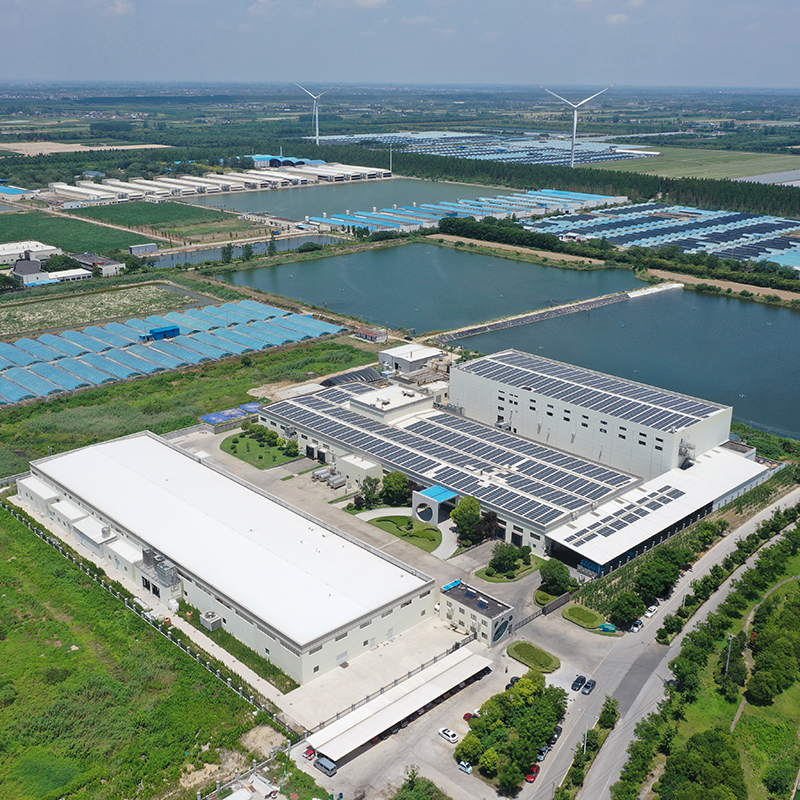
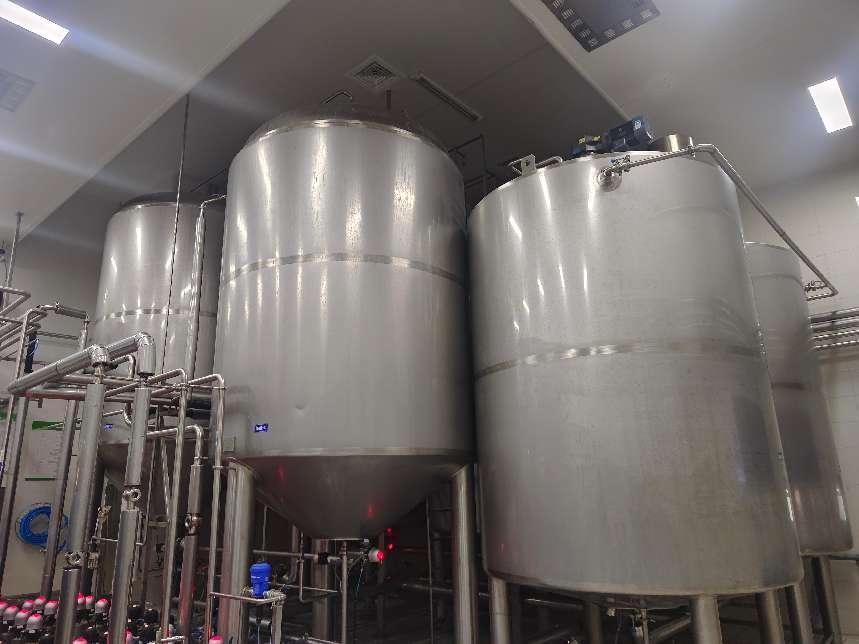
A modern, fully automated facility is a key indicator of production scale and hygiene control.
Key Evaluation Criteria for Egg Product Suppliers
Selecting a supplier goes beyond price comparison. A holistic assessment should cover the following critical areas:
1. Quality Assurance and Food Safety Certifications
Certifications are non-negotiable proof of a supplier's commitment to safety and quality. Insist on internationally recognized standards. A reputable supplier should hold, at minimum:
- BRCGS & SQF: These are among the most rigorous Global Food Safety Initiative (GFSI) benchmarked schemes, essential for supplying major retailers and multinational food brands.
- ISO 9001 & ISO 14001: Demonstrate a systematic approach to quality management and environmental responsibility.
- HACCP: The foundational hazard analysis system for food safety.
- Halal & Other Religious Certifications: Critical for accessing specific regional markets and consumer segments.
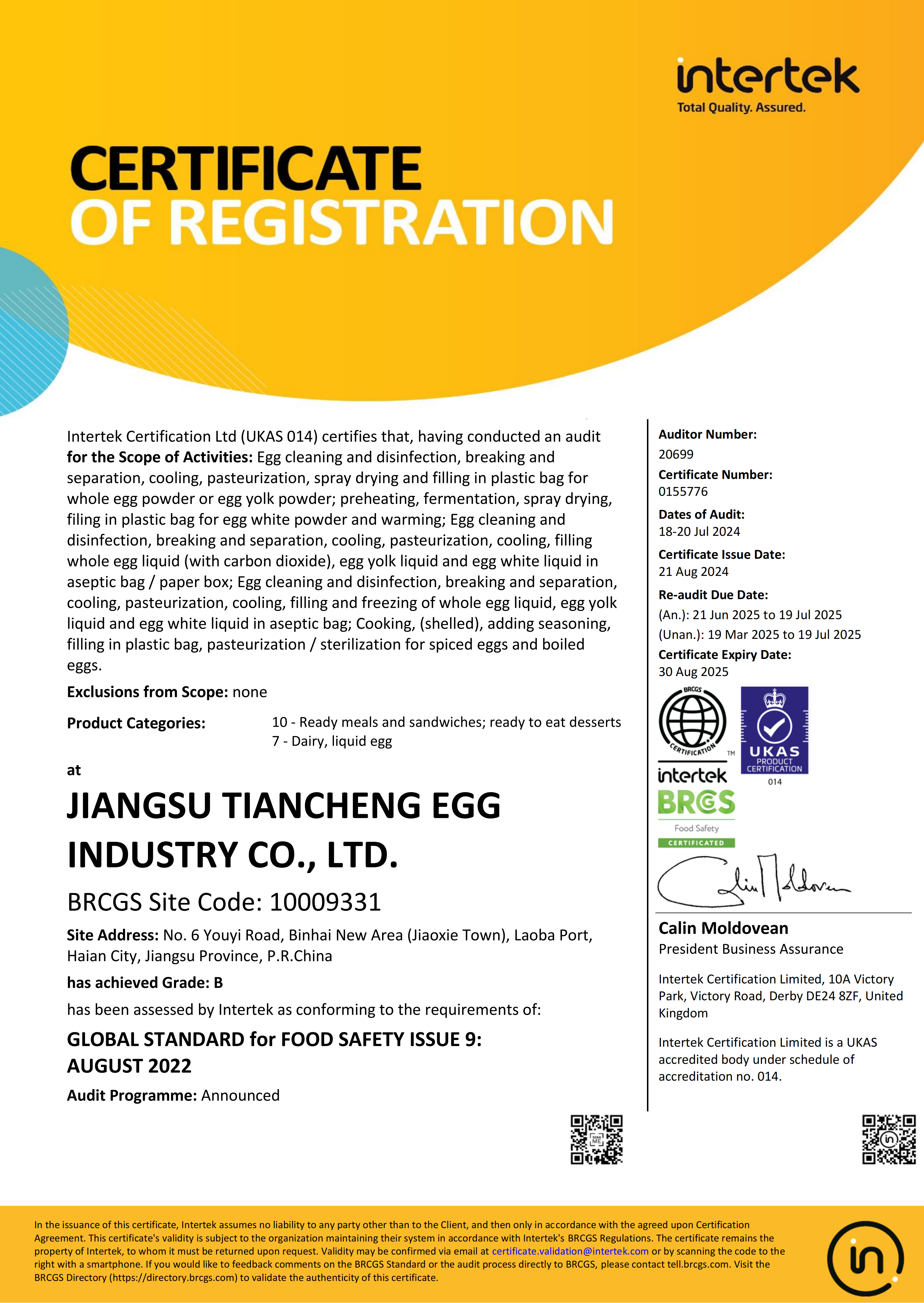
For instance, Jiangsu Tiancheng Egg Industry Co., Ltd. publicly discloses its comprehensive certification portfolio, including SQF, BRCGS, ISO 9001, ISO 14001, HACCP, and Halal, providing immediate transparency for procurement due diligence.
2. Vertical Integration and Raw Material Control
The quality of finished Pasteurized Egg Liquid or Egg White Powder is intrinsically linked to the quality of the shell eggs. Suppliers with control over their raw material supply offer superior traceability and consistency. Evaluate:
- Ownership of Layer Farms: Does the processor own or have strategic partnerships with large-scale, modern farms?
- Biosecurity and Hen Welfare Standards: These directly impact egg safety and quality parameters.
- Traceability Systems: Ability to trace a batch of Frozen Egg Liquid back to the farm and even the flock of origin.
A company like Jiangsu Tiancheng Egg Industry sources its raw material from its parent group's modern intelligent farm with a 5-million-hen capacity, ensuring a closed-loop, controlled supply chain from farm to finished product.
3. Technological Capability and Product Portfolio
Assess the supplier's ability to meet your specific product needs. The egg processing spectrum is broad:
- Liquid Products: Pasteurized Egg Liquid (whole, white, yolk), Salted Egg Liquid, Sugared Egg Liquid, Heat Stable Egg Liquid.
- Dried Products: Whole Egg Powder, Egg White Powder, Egg Yolk Powder, Heat Stable Egg Yolk Powder.
- Specialty Products: Eggshell Membrane for nutraceuticals, and other deep-processed items.
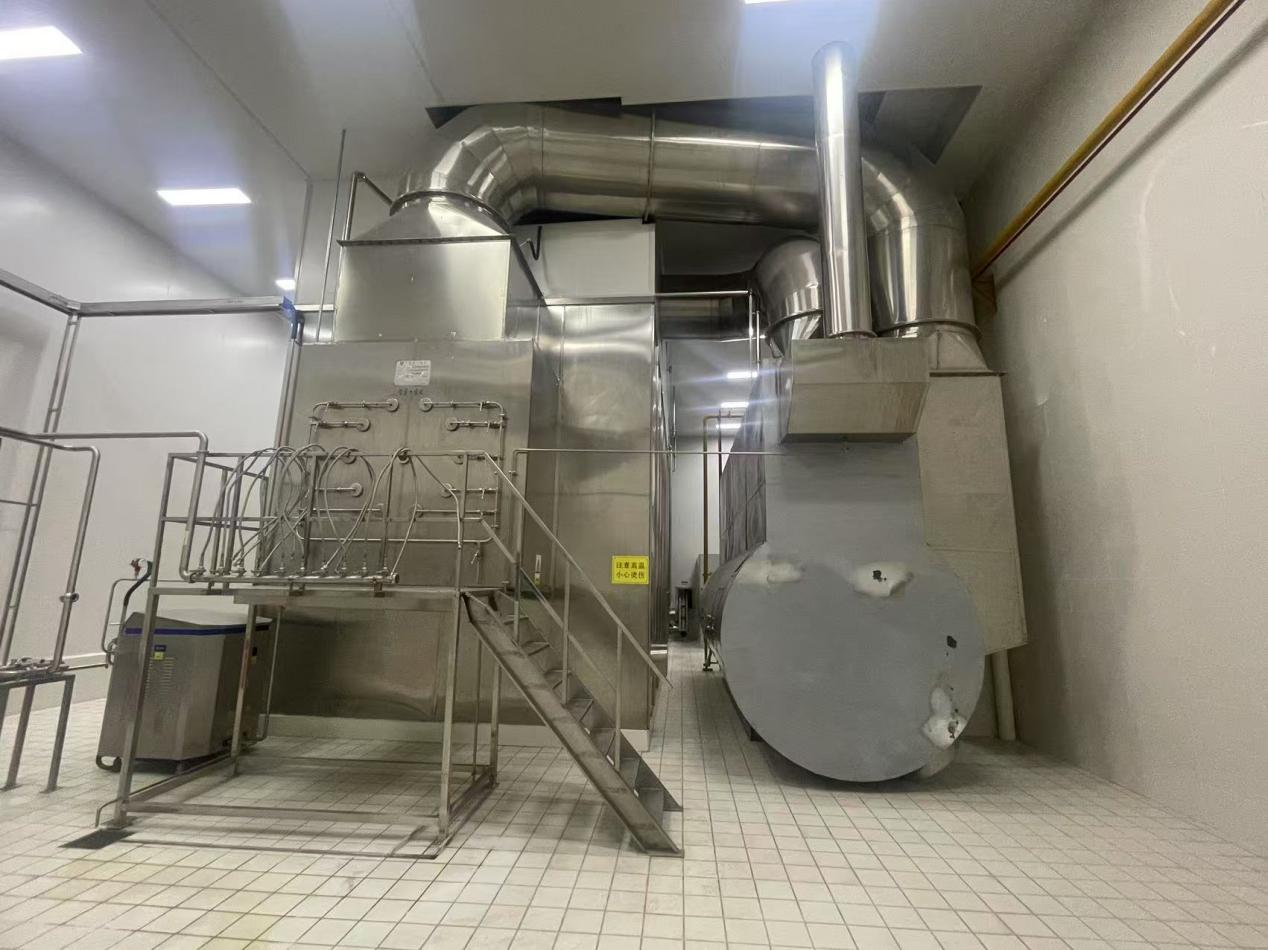
Inquire about their processing equipment. State-of-the-art machinery, such as MOBA (Netherlands) automated breaking systems, precise pasteurizers, and advanced spray dryers, indicates a focus on efficiency, yield, and gentle product treatment. Annual and per-shift capacity (e.g., 36,000 tons of egg liquid / 1,800 tons of egg powder) is a direct indicator of scale and reliability for large-volume contracts.
4. R&D and Customization Potential
Leading suppliers invest in research to develop new applications and tailor products. Look for evidence of:
- In-house R&D and Laboratory Facilities: Capability for product testing, shelf-life studies, and application support.
- Patent Holdings: Active innovation, such as patents for specialized extraction or processing equipment.
- Custom Blending/Formulation: Ability to produce customer-specific blends of Egg Liquid Products with unique functional properties.
5. Supply Chain and Global Market Experience
Experience in exporting, particularly to regulated markets like the EU, the US, or Japan, is a strong positive signal. It demonstrates the supplier's ability to navigate complex logistics, customs, and meet stringent phytosanitary and safety regulations. Review their existing client portfolio; partnerships with globally recognized food conglomerates serve as a powerful third-party validation of their capabilities and reliability.
Practical Steps in the Supplier Selection Process
- Define Specifications: Clearly outline your required product type (e.g., Heat Stable Egg Yolk Powder for mayonnaise), technical parameters, packaging, and volumes.
- Long-list Suppliers: Use industry directories, B2B platforms, and trade shows to identify potential candidates. Verify official company websites for foundational information.
- Request for Information (RFI): Send a detailed questionnaire covering certifications, capacity, product list, and quality control procedures.
- Audit and Site Visit: For critical suppliers, an on-site audit is invaluable. Inspect the facility, from the Egg Beating Workshop and pasteurization system to the Finished Goods Warehouse. A virtual tour can be a preliminary step.
- Sample Evaluation: Request product samples for your own quality and application testing.
- Commercial Negotiation: Discuss pricing, Incoterms, payment terms, and logistics. Ensure they have experience with the required shipping methods (e.g., frozen container for Frozen Egg Liquid).
Conclusion: Building a Strategic Partnership
Selecting a supplier for egg products is a strategic decision that impacts your product quality, operational efficiency, and brand reputation. By rigorously applying the criteria of certification, vertical integration, technological capability, and market experience, procurement teams can move beyond transactional relationships. The goal is to establish a partnership with a competent and transparent supplier, such as an industry participant like Jiangsu Tiancheng Egg Industry Co., Ltd., which embodies these principles through its integrated operations, top-tier certifications, and advanced production lines. A diligent selection process mitigates risk and lays the foundation for a reliable, long-term supply of high-quality Egg Liquid Products and egg powders for your business needs.
For further inquiries or to connect with industry experts, you can reach out via the official channels of potential suppliers. For example, contact for Jiangsu Tiancheng Egg Industry can be made through Mr. Hu at +86 15706273311, email jstc@tcgrp.cn, or by visiting their website at www.tcegg.cn or www.tcegggroup.com.
Have Questions or Need More Details?
Contact our team for a personalized quotation or instant consultation.
Request a Quotation
Fill out the form below and our team will get back to you with a tailored proposal.
WhatsApp Direct Chat
Prefer to chat in real-time? Message us on WhatsApp for instant assistance & quick answers.
- Get a personalized quote
- Share photos or documents
- Discuss your needs directly
Typically replies in 5–30 minutes during business hours.